
Some practices survive not because they are preserved deliberately, but because they continue to meet human needs in changing environments. Rituals that once belonged to daily life, community health, or spiritual tradition gradually adapt into modern wellbeing habits without losing their core purpose. People who seek out a Thai massage spa often participate in a lineage of movement, touch, and rhythm that long predates contemporary wellness culture.
Originally, many traditional body practices developed as part of communal care rather than individual indulgence. Touch supported circulation, flexibility, and comfort in physically demanding lifestyles. Movement patterns maintained mobility in agricultural or manual work. Breath awareness supported endurance and recovery. These functions remain relevant even as lifestyles become sedentary and digitally driven.
What changes is context, not necessity. Modern environments create different strains, prolonged sitting, screen posture, fragmented attention, yet the body still responds to the same fundamental cues of movement, pressure, and rhythmic pacing.
From Community Habit to Personal Maintenance
In earlier settings, bodywork often occurred within families or local communities rather than formal facilities. Knowledge transferred through observation and repetition rather than certification. The practice embedded itself into normal life rather than scheduled appointments.
Modern adaptation formalises this knowledge while preserving core mechanics. Structured environments provide consistency, hygiene standards, and accessibility while maintaining tactile principles that regulate the nervous system and muscular balance.
Personal maintenance replaces communal ritual, yet the underlying physiological benefits remain intact.
Embodied Memory and Pattern Recognition
The body recognises familiar patterns even without conscious awareness. Rhythmic pressure, gentle stretching, and predictable sequencing trigger relaxation responses rooted in sensory memory rather than logic.
These responses activate quickly because the nervous system evolved to interpret consistent touch as safety and regulation. This biological continuity explains why traditional techniques remain effective across cultures and generations.
Modern stress does not override these pathways, it amplifies their relevance.
Adaptation Without Losing Integrity
Contemporary wellness spaces adjust pacing, privacy, and communication style to suit modern expectations. However, the mechanical elements of movement and pressure remain largely unchanged.
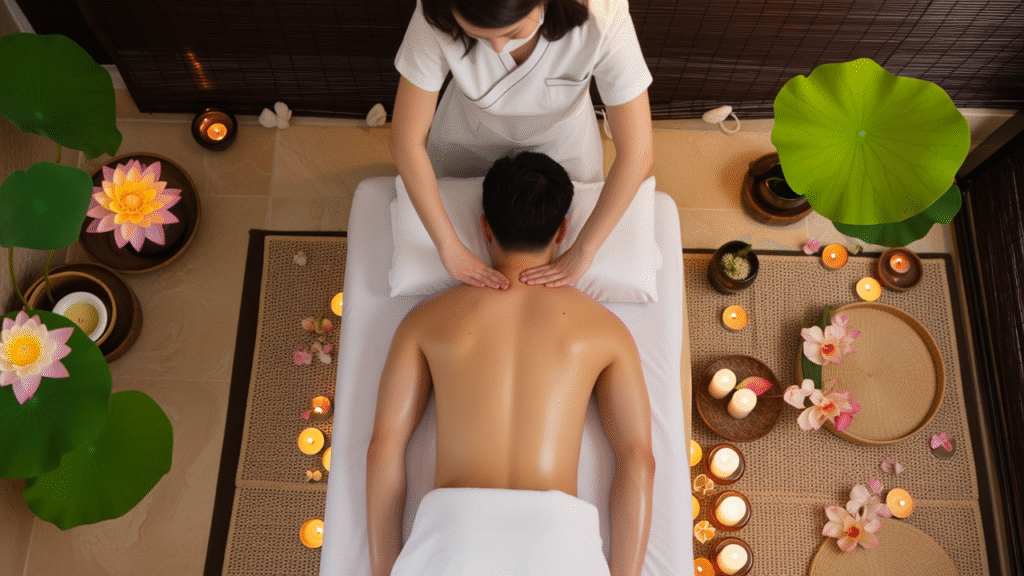
Adaptation occurs around delivery rather than substance. This balance preserves authenticity while allowing accessibility. When adaptation respects core principles, effectiveness persists.
Psychological Permission to Slow Down
Ritual creates permission. Entering a structured environment signals transition away from productivity and performance expectations.
This psychological boundary supports mental disengagement and attention reset.
Ritual framing reduces guilt around rest and encourages consistency rather than sporadic recovery.
Why Ancient Practices Remain Current
Modern recovery challenges mirror historical physical strain in different forms. Muscular tension, nervous overload, and fatigue remain constant human experiences regardless of era.
Practices that address these fundamentals continue to hold relevance without needing reinvention.
Cultural rituals endure because they solve timeless physiological needs using simple, repeatable mechanisms. When modern life amplifies stress rather than replacing it, these inherited practices become anchors of stability rather than relics of the past.